
Dear Brothers and Sisters in Christ,
With great joy and gratitude to God, we announce that our Holy Father, Pope Leo XIV, has appointed Archbishop James R. Golka as the next Archbishop of Denver.
Dear Brothers and Sisters in Christ,
With great joy and gratitude to God, we announce that our Holy Father, Pope Leo XIV, has appointed Archbishop James R. Golka as the next Archbishop of Denver.
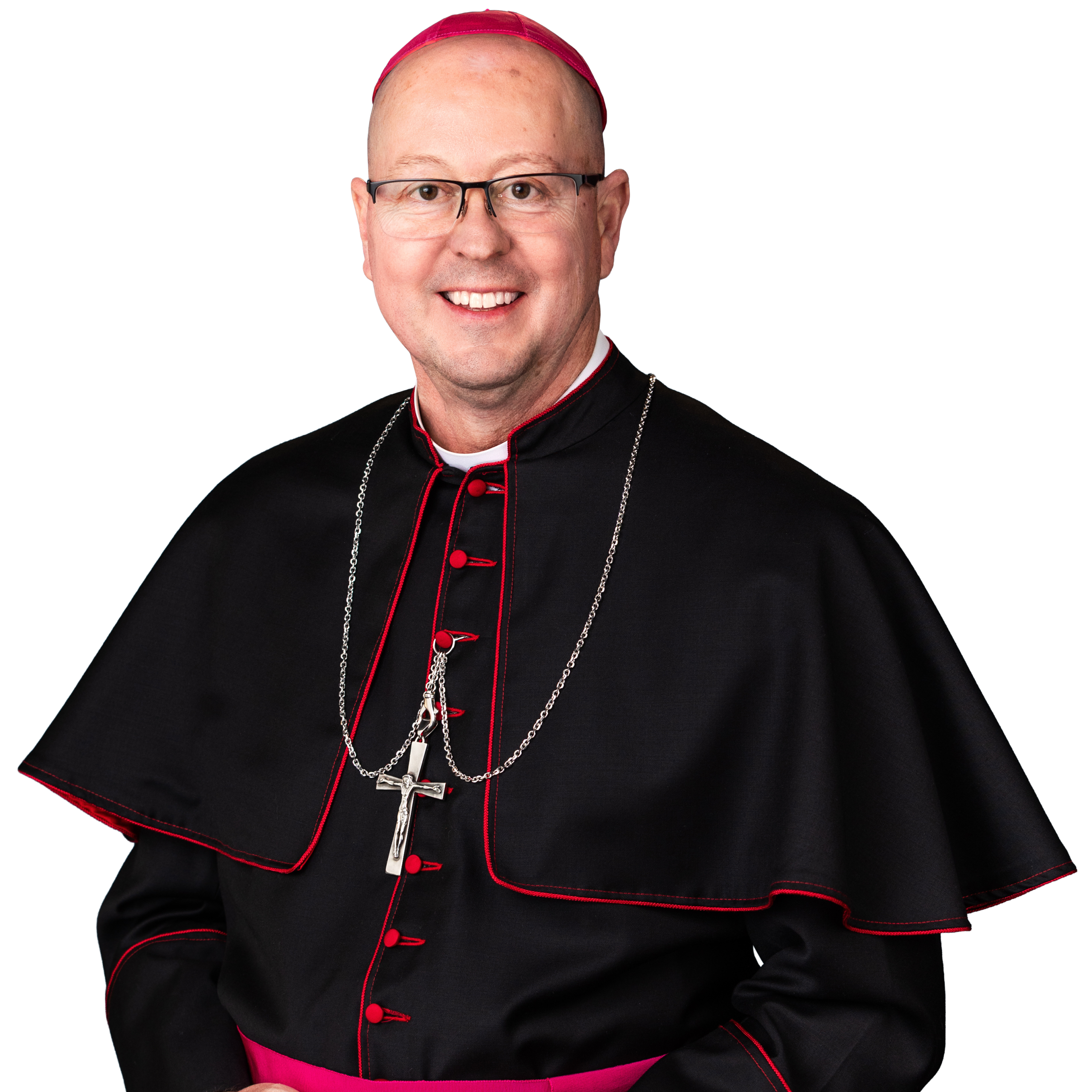
VATICAN ANNOUNCES NEXT ARCHBISHOP OF DENVER
DENVER — Pope Leo XIV has named Archbishop-designate James R. Golka as the sixth archbishop of Denver, the Holy See announced early Saturday, February 7.
Archbishop-designate James R. Golka, 59, is the current Bishop of the Diocese of Colorado Springs. He will succeed Archbishop Samuel J. Aquila, 75, who has been chief shepherd of the Archdiocese of Denver since 2012.
Archbishop Aquila’s retirement — which he offered to the pope upon his 75th birthday, Sept. 24, 2025, as required under canon law — was accepted by the Holy Father.
Archbishop-designate James R. Golka will be installed as Denver’s archbishop during a solemn Mass on Wednesday, March 25, 2026. Upon his installation, Archbishop-designate James R. Golka will assume pastoral responsibility for Colorado’s largest diocese and metropolitan see, which is home to more than 600,000 Catholics, 148 parishes and 31 Catholic schools.
On April 30, 2021, Pope Francis named him the third Bishop of the Diocese of Colorado Springs, succeeding the late Bishop Michael Sheridan. His episcopal ordination took place on June 29, 2021, at Holy Apostles Church in Colorado Springs, with Archbishop Samuel Aquila and then-Archbishop Christophe Pierre serving as co-consecrators. His episcopal motto is “Stewards of God’s Mysteries.”
Archbishop Aquila will introduce Archbishop-designate James R. Golka to Denver’s faithful during a news conference at 10 a.m. Saturday, February 7, 2026. The news conference will be livestreamed at www.archden.org/live-events.
The Most Reverend James R. Golka was appointed the sixth archbishop of the Archdiocese of Denver on February 7, 2026, by Pope Leo XIV. He was installed as Archbishop of Denver on March 25, 2026.
For his episcopal motto, Archbishop Golka has chosen, “Stewards of God’s Mysteries.” His ministry as shepherd is marked by a deep commitment to faithful stewardship, fostering vibrant parish life and encouraging all people to encounter Christ and live out their faith with generosity and devotion.
Archbishop Golka was born on September 22, 1966, in Grand Island, Nebraska, the fourth of ten children. He studied philosophy and theology at Creighton University and later earned a Master of Divinity and a Master of Arts in Sacramental Theology from St. Paul Seminary in Minnesota. He was ordained to the priesthood for the Diocese of Grand Island on June 3, 1994.
Following years of parish ministry and diocesan leadership — including service as Vicar General and pastor of the Cathedral of the Nativity of the Blessed Virgin Mary — he was named the third Bishop of Colorado Springs by Pope Francis on April 30, 2021, and ordained a bishop on June 29, 2021. During his time there, he worked to strengthen stewardship, expand Hispanic ministry and establish the Shrine of Our Lady of Guadalupe, Mother of the Divine Redeemer, in 2025.
As Archbishop, he will serve the people of Northern Colorado with a focus on deepening discipleship, strengthening the Church’s mission and forming faithful stewards of God’s gifts.
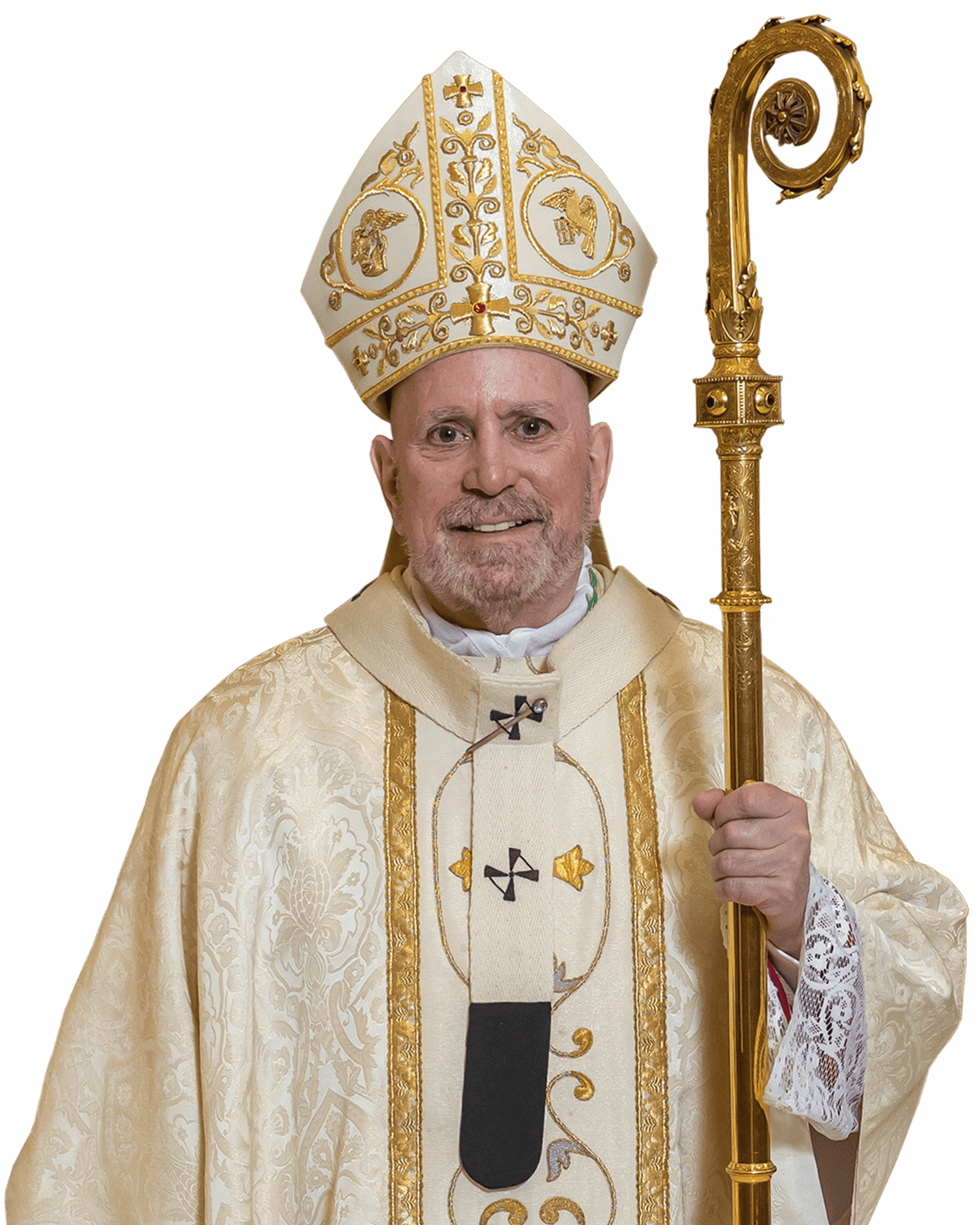
Archbishop Emeritus Samuel J. Aquila was named the archbishop for the Archdiocese of Denver on May 29, 2012, by Pope Benedict XVI.
For his episcopal motto, Archbishop Emeritus Aquila chose the Blessed Mother’s words from the Wedding at Cana, “Do whatever he tells you” (John 2:5). His ministry as shepherd of the people of northern Colorado is dedicated to helping every person experience the love of the Father, Son and Holy Spirit and be moved by that encounter to a lasting commitment to share the Gospel with enthusiasm, creativity and joy.
Archbishop Emeritus Aquila was born on September 24, 1950, in Burbank, Calif. He was ordained to the priesthood in Denver on June 5, 1976. He served in parish ministry for 11 years after his ordination. In 1990, he earned a Licentiate in Sacred Theology (STL) specializing in Sacramental Theology from the Pontifical Atheneum San Anselmo in Rome. Then-Father Aquila served the Archdiocese of Denver in a number of leadership positions, most notably as the first Rector of St. John Vianney Theological Seminary, from 1999 to 2001. He was appointed Coadjutor Bishop of Fargo, N.D., on June 12, 2001. On March 18, 2002, he became bishop of Fargo upon the retirement of Bishop James Sullivan. He was installed as the fifth archbishop on July 18, 2012.
The Holy Father accepted the Archbishop Emeritus’s retirement on February 7, 2026. He will celebrate 50 years of Holy Priesthood on June 5, 2026.
February 7, 2026
My Brothers and Sisters,
As I prepare to enter retirement, my heart is filled above all with gratitude — to God, to the priests and deacons of this local Church, to consecrated women and men, and to the lay faithful who have walked together as missionary disciples in Northern Colorado. From the beginning of my ministry here, I have been convinced that the Lord is at work among us, calling us ever more deeply to conversion, communion and mission.
In my years as your Archbishop, I have often returned to the truth that the renewal of the Church does not begin with programs, but with encounter — an encounter with Jesus Christ, truly present in the Eucharist, alive in his Word, and active in his people. When we place Christ at the center, and stay attached to the Vine who is Christ, the Church becomes what she is meant to be and bears fruit: a sacrament of God’s love for the world, sent forth to proclaim the Gospel with joy and conviction.
I give thanks for the countless acts of fidelity, generosity and courage I have witnessed across our parishes, schools, ministries and families. These are signs of hope, even in times of challenge, and reminders that the Holy Spirit continues to guide the Church in every age, including — and especially — in our apostolic age.
As we look to the future, I ask you to join me in prayerful support for my brother bishop whom the Lord has called to shepherd this Archdiocese: Archbishop-designate James R. Golka. May he be strengthened by your prayers, encouraged by your collaboration and sustained by the grace of the office he will receive. Welcome him with open hearts, confident that Christ himself remains the ultimate Shepherd of the Church.
Please know of my continued prayers for you. May the Lord bless you, keep you close to His Sacred Heart, and lead us all ever deeper into the joy of the Gospel. And may Our Lady of Guadalupe, the mother of Jesus and our mother, always keep you under the mantle of her protection.
Sincerely yours in Christ,

Most Rev. Samuel J. Aquila, S.T.L.
Archbishop of Denver
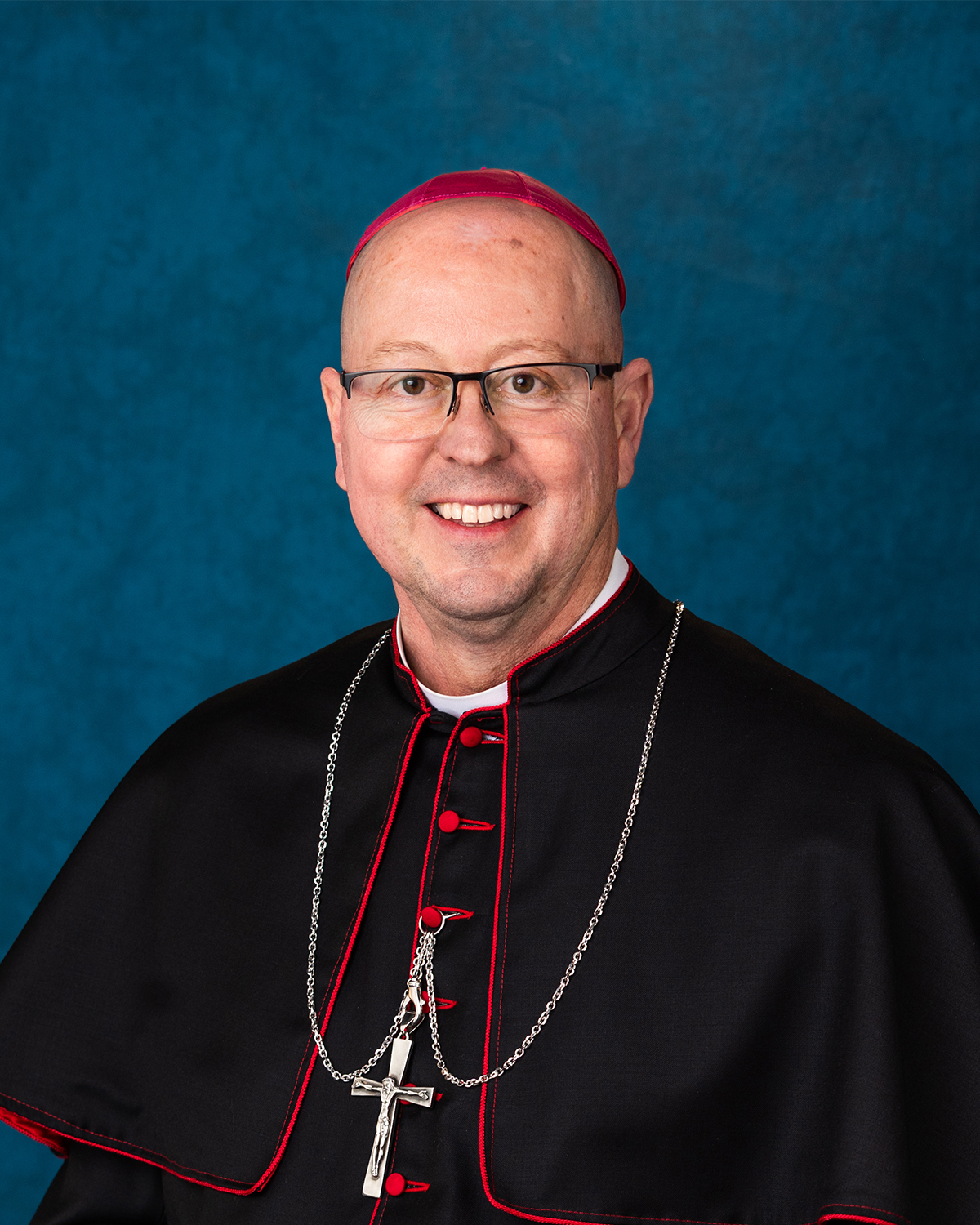
Current Archbishop
Archbishop James R. Golka
Installed March 25, 2026
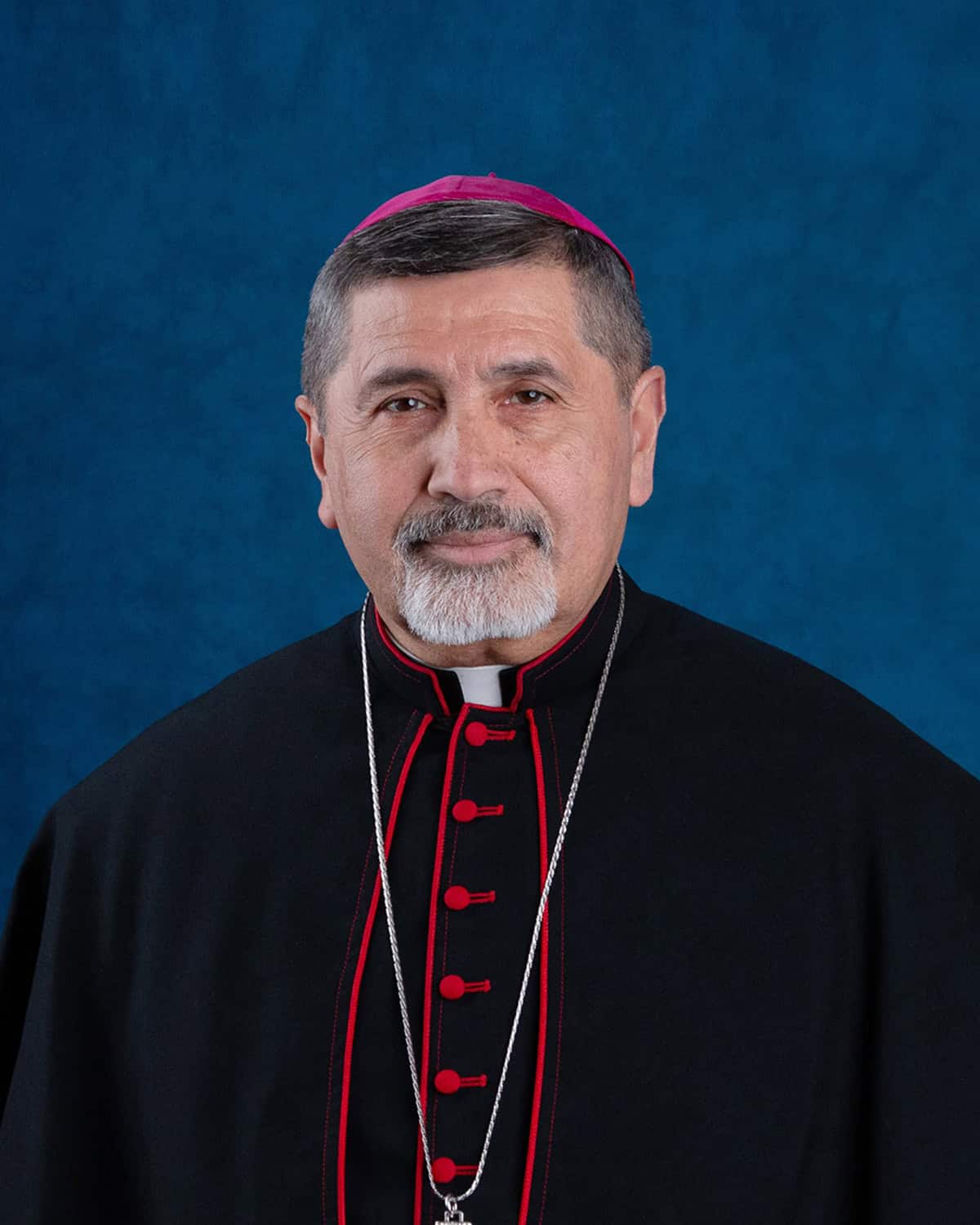
Current Auxiliary Bishop
Bishop Jorge Rodriguez
Ordained November 4, 2016
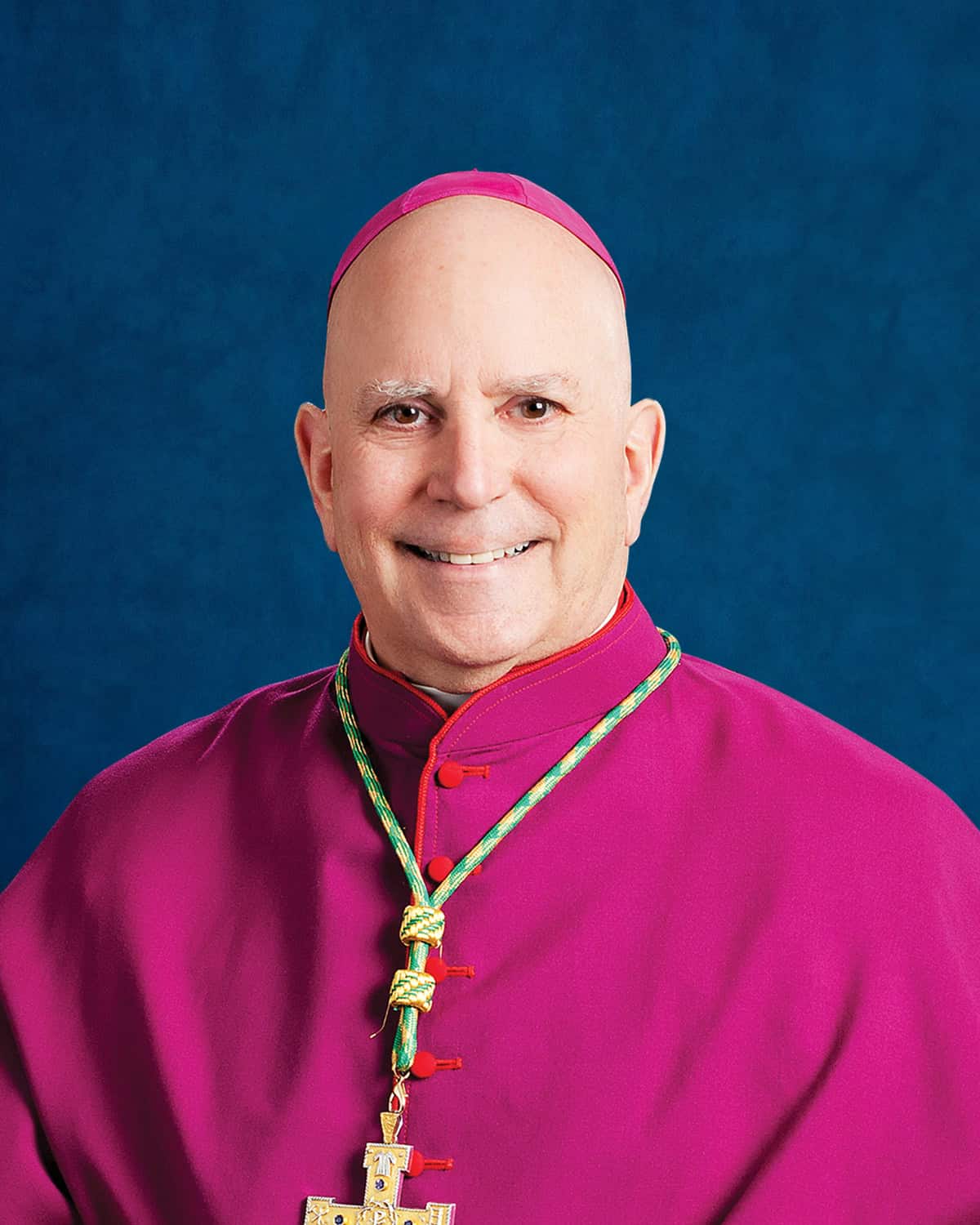
Archbishop Emeritus of Denver
Emeritus Samuel J. Aquila
Installed July 18, 2012
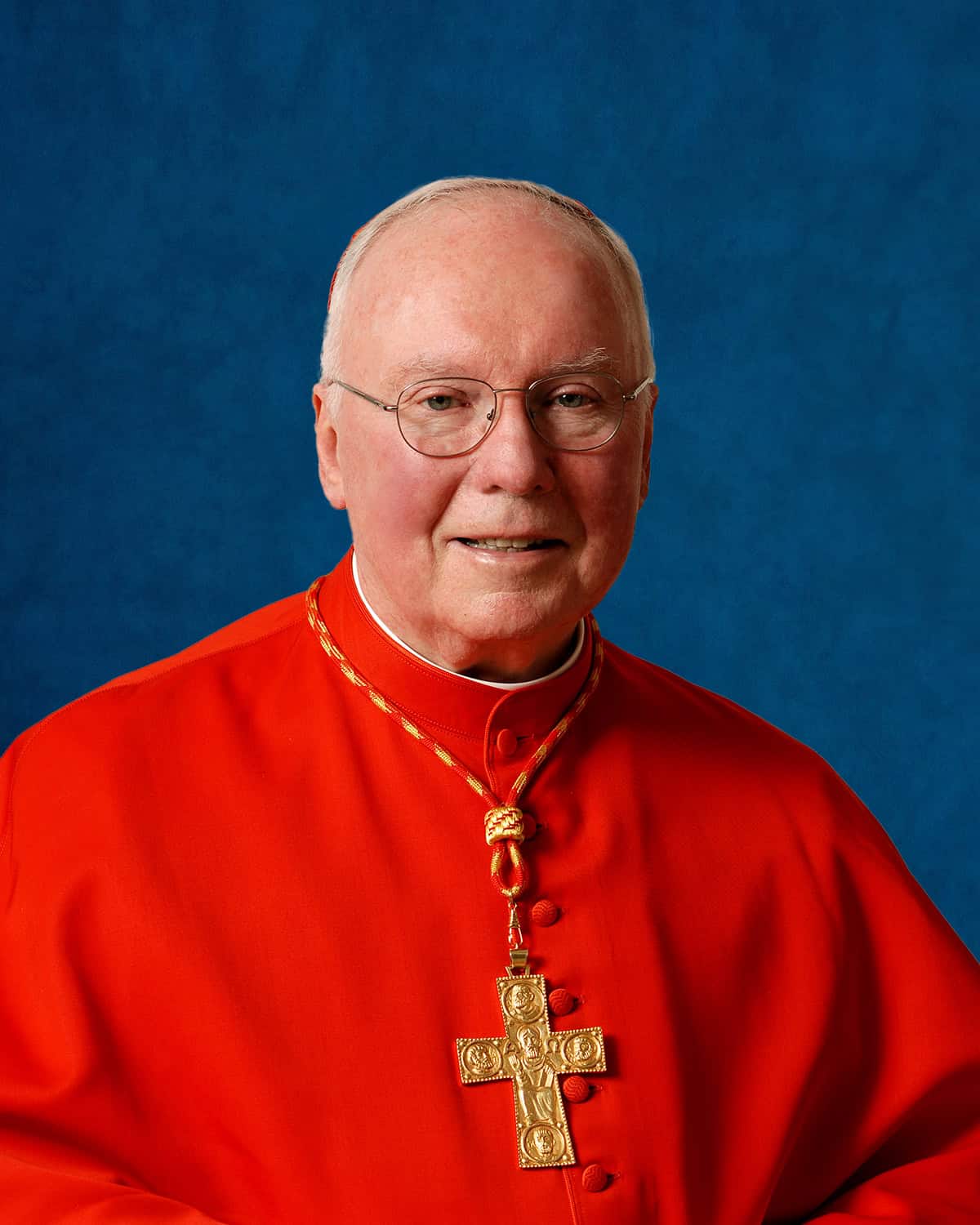
Archbishop Emeritus of Denver
James Francis Cardinal Stafford
Established (Diocese)
August 16, 1887
Elevated (Archdiocese)
November 15, 1941
Spans 25 Counties in Northern Colorado:
Adams, Arapahoe, Boulder, Broomfield, Clear Creek,
Denver, Eagle, Garfield, Gilpin, Grand, Jackson, Jefferson,
Larimer, Logan, Moffat, Morgan, Phillips, Pitkin, Rio Blanco,
Routt, Sedgwick, Summit, Washington, Weld, Yuma
Colleges/Seminaries:
Over 600,000
Catholics
3,985,446
Estimated overall population of Archdiocesan territory
148 Parishes
(incl. stations and missions)
40,154
Area Square Miles
30 Grade Schools
1 Archdiocesan High School
8,600 +
Primary & Secondary students
4 Catholic Hospitals
302 Total Active Priests
174 Active Archdiocesan Priests
43 Retired Archdiocesan Priests
209 Deacons
90 Seminarians
14 Religious Brothers
135 Religious Sisters
Pre-Diocese Leader
Before the Diocese of Denver was established, Colorado was considered mission territory. Then-Father Joseph Projectus Machebeuf was sent to minister to the territory that would become the state of Colorado in 1860. He would later become the bishop of the territory that would become the Diocese, then Archdiocese, of Denver.
Bishops of Denver (before elevation to Archdiocese)
These leaders were heads of the Diocese of Denver from its establishment in 1887 until its elevation to an archdiocese in 1941:
Total number of bishops of Denver: 4
Archbishops of Denver (after elevation in 1941)
Once the Diocese was elevated to an Archdiocese on November 15, 1941, Bishop Vehr was appointed its first archbishop. His successors were then named archbishops upon appointment:
Total number of archbishops of Denver: 6
In 1856, Our Lady of Guadalupe was founded in Conejos, CO, the oldest Catholic church in the state. In 1860, Bishop John Baptist Miege of Leavenworth, KS, visited Denver and celebrated the first Mass in the town before authorizing the construction of the first church in Denver. At the time, Denver was considered part of his territory before he petitioned Rome for the territory to have it transferred to the care of the Diocese of Santa Fe, NM. Then-Father Machebeuf arrived from Santa Fe on October 29, 1860, and on Christmas that same year, the first Mass was celebrated in St. Mary’s Pro-Cathedral.
In March 1868, the Vicariate Apostolic of Colorado was established by Pope Pius IX, with Machebeuf travelling to Cincinnati, OH, to receive his consecration as a bishop on August 16, 1868.
The Vicariate Apostolic of Colorado was officially elevated to the Diocese of Denver on August 16, 1887, by Pope Leo XIII.
That same year, Bishop Nicholas Matz was appointed Coadjutor Bishop, automatically succeeding Machebeuf upon his death in 1889. Under Bishop Matz, the diocese saw significant growth with the establishment of St. Thomas Seminary, the founding of the diocesan newspaper and in 1912, the dedication of the Cathedral of the Immaculate Conception.
Bishop Vehr arrived in Denver on July 16, 1931, to succeed Bishop J. Henry Tihen, who had recently resigned due to poor health. He was consecrated a bishop in Cincinnati just a month earlier and was installed as Bishop of Denver three hours after he arrived by Archbishop Daeger of Santa Fe.
On November 15, 1941, Pope Pius XII elevated the Diocese of Denver to the Archdiocese of Denver and, at the same time, created the Diocese of Pueblo. Newly elevated Archbishop Vehr would oversee a second period of growth during the post-war years, with over 40 parishes established before his retirement in 1967. Archbishop Vehr, like Bishop Matz before him, was a proponent of Catholic education and pushed for schools to be established before parishes, overseeing 30 new schools during his tenure.
When the Diocese of Denver was elevated to an Archdiocese in 1941, this led to the creation of the Diocese of Pueblo with Bishop Joseph Willging installed as the first bishop on March 12, 1942.
In 1975, with the rapid growth occurring in Colorado Springs, Denver Archbishop James Casey created the Vicariate of Colorado Springs, naming Auxiliary Bishop Richard Hanifen as vicar. Pope John Paul II would formally elevate it to a diocese on January 30, 1984, with Hanifen becoming its first bishop.
Beyond its founding bishop, Joseph Projectus Machebeuf, the Archdiocese of Denver has been shaped by a number of influential leaders and historic moments. Archbishop Urban J. Vehr guided the diocese through its elevation to an archdiocese in 1941, marking a significant milestone in its growth and prominence. J. Francis Cardinal Stafford, who served as archbishop from 1986 to 1996, brought international attention to Denver in 1993 by hosting Pope Saint John Paul II and World Youth Day — an event that left a lasting spiritual and cultural impact on both the local Church and the city.
Archbishop Charles J. Chaput, O.F.M. Cap., who led the archdiocese from 1997 to 2011, was widely recognized as a leading voice in Catholic intellectual and public life in the United States. A prolific author and sought-after speaker, Archbishop Chaput has written several influential books on faith, culture and religious freedom, contributing significantly to national conversations about the role of Christianity in public life. His leadership further elevated Denver’s profile as a center for Catholic thought and engagement.
Today, the archdiocese is led by Archbishop Samuel J. Aquila, whose tenure has emphasized evangelization, pastoral care and accountability. Under Archbishop Aquila’s leadership, the Archdiocese of Denver participated in a voluntary Independent Reconciliation and Reparations Program (IRRP) from 2019 to 2020 to address past clergy sexual abuse. When the COVID pandemic struck in 2020, Archbishop Aquila suddenly found himself with a cleared schedule and an open heart. He spent the time in deep, intentional prayer discerning God’s will for the Archdiocese. From that prayer, Archbishop Aquila was inspired to lead the Archdiocese in a fundamental shift in vision, mission and service to meet a world that no longer shares the Church’s foundational beliefs. In the years since, this has borne much fruit in the way the Archdiocese has responded to the needs of the people of Northern Colorado.
Religious sisters and clergy have also played pivotal roles in the archdiocese’s history. Saint Frances Xavier Cabrini came to Denver in 1902 to help open the first school at Our Lady of Mount Carmel Parish in North Denver. Her missionary work laid the foundation for lasting charitable efforts, including the establishment of the Queen of Heaven Orphanage by her sisters. Today, the Mother Cabrini Shrine in Golden — located on land she once owned — stands as a testament to her enduring legacy in Colorado.
Another significant figure is Monsignor Matthew Smith, who was named editor of the Denver Catholic Register in 1912. During the 1920s, he used the newspaper as a powerful voice against the rise of the Ku Klux Klan in Denver. Monsignor Smith also pioneered the “Register System” of diocesan newspapers and later founded what became the National Catholic Register, extending Catholic journalism’s influence nationwide.
At the heart of the archdiocese stands the Cathedral Basilica of the Immaculate Conception, a central landmark and enduring focal point for Catholic life in Denver. Together, these leaders, saints, and institutions reflect the rich spiritual, cultural, and historical legacy of the Archdiocese of Denver.
The Archdiocese of Denver serves a large Catholic population across northern Colorado and continues its mission of evangelization, education and service to the community.
Kelly Clark, Director of Communications
Kellymb.clark@archden.org
High-resolution images are available upon request.
Archdiocese of Denver
Pastoral Center
1300 S. Steele St.
Denver, CO 80210
Website | archden.org
Facebook | facebook.com/archdioceseofdenver
YouTube | youtube.com/@archdioceseofdenver
X | @ArchDenver
Instagram | @Denverarchdiocese
Publications:
Denver Catholic | www.denvercatholic.org
El Pueblo Católico | www.elpueblocatolico.org
© 2026 Archdiocese of Denver.
